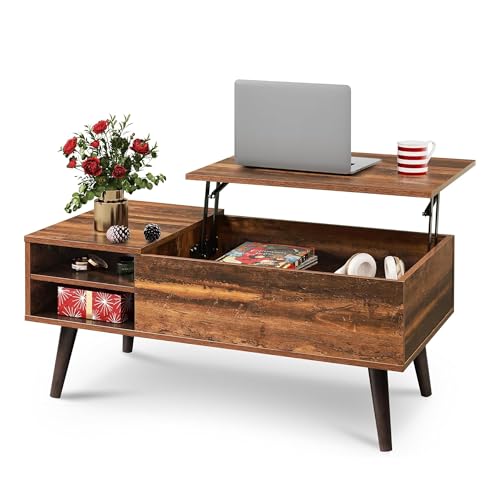
Specifications at a glance
| Product | Price | Lift top | Dimensions (L×W×H) | Weight capacity | Storage |
|---|---|---|---|---|---|
| WLIVE Lift Top Coffee Table with Hidden Storage, Adjustable Shelf, Brown | Check price on Amazon | Yes | Not stated | Not stated | Hidden compartment under lift top + removable, adjustable shelf |
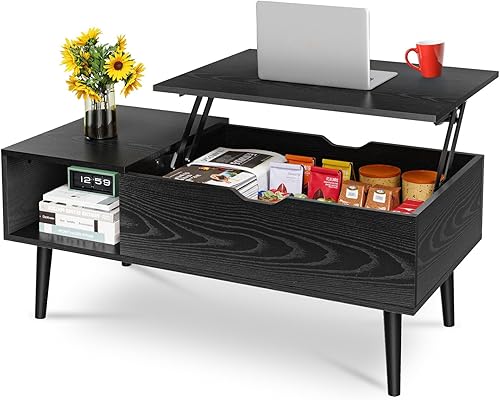
| OLIXIS Lift Top Coffee Table, Wood Coffee Table for Living Room Home Black | Check price on Amazon | Yes, raises 6.3" | Not stated | Not stated | Hidden space under top + two side shelves |
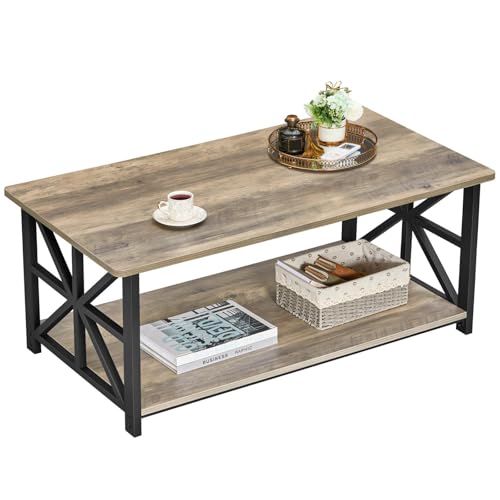
| GreenForest Round Corners Coffee Table for Living Room | Check price on Amazon | No | 39.37 × 20.47 × 18.7 in | Up to 200 lb | Storage/display shelf |
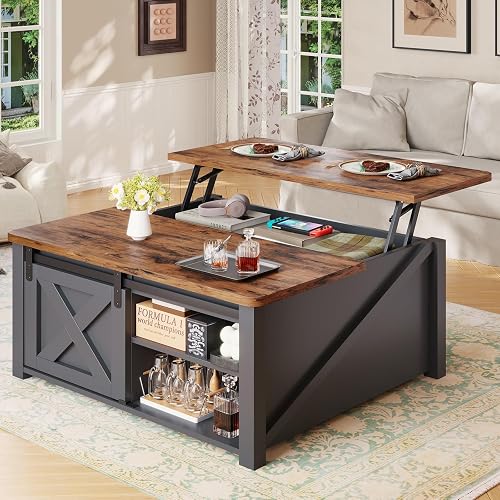
| SEDETA 31.5" Lift Top Coffee Table with Storage, Square Coffee Tables for Living Room, Farmhouse Coffee Table with Large Hidden Storage Compartment and Adjustable Shelves, Black | Check price on Amazon | Yes, 19.7" to 25.4" | 31.5" square (top) | Not stated | Hidden compartment + 4 open compartments, 3 height-adjustable shelves |
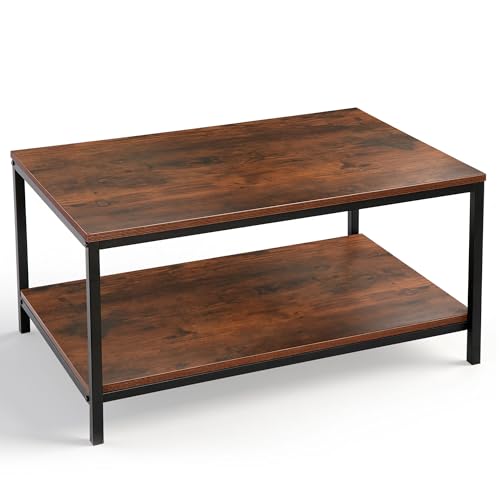
| SUPER DEAL 2-Tier Industrial Coffee Table with Storage Shelf for Small Apartment Living Room, Rectangle Wood and Stable Metal TV Stand Side End Table, Rustic Brown | Check price on Amazon | No | 31.5 × 20 × 16.54 in | Up to 132 lb per shelf | Lower open shelf |
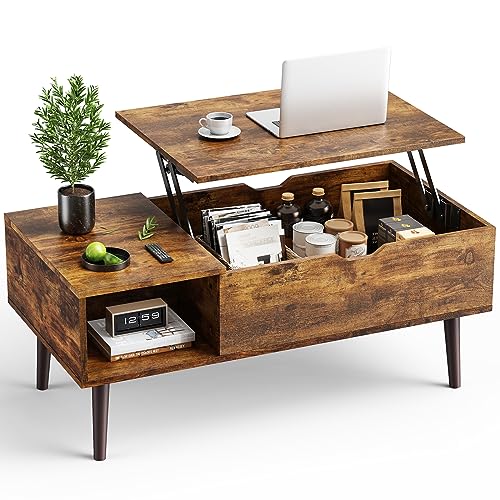
| OLIXIS Wooden Coffee Table, Lift Top Coffee Table with Large Hidden Compartment and Ample Storage Shelf, Lift Tabletop Dining Table for Living Room, Home Small Space, Rustic | Check price on Amazon | Yes, rises 6.3" | Not stated | Not stated | Hidden compartment + side shelves |
Quick answer: Good coffee table styling comes down to three moves — group objects in odd numbers, vary the heights, and leave at least a third of the surface empty. The hardest part isn't the decor, it's the clutter, which is why a table with real storage underneath does more for the look than any tray or candle you can buy. Below: the styling method, then the tables in this data set that support it, starting with the WLIVE Lift Top Coffee Table with Hidden Storage, Adjustable Shelf, Brown.
The five rules that actually do the work
1. Divide the surface into thirds. Mentally split the top into three zones. Style two, leave one completely bare. That empty third is where the remote, the mug and the laptop live in real life. Styling that ignores real life gets dismantled by Tuesday.
2. Build a height triangle. Three objects at three different heights — something tall (a vase, a candlestick), something mid (a small sculpture, a bowl), something flat (a stack of two books). Your eye travels between them instead of skidding across a flat plane.
The best how to style coffee table for your situation depends on how you plan to use it and where.
3. Use a tray as a fence. A tray turns four random objects into one intentional object. It also means you can lift the entire arrangement off the table in one motion when you need the space. If you buy one decorative thing for your coffee table, buy the tray.
4. Mix at least three textures. Wood, ceramic, glass, metal, paper, a bit of green. A wood-grain tabletop already gives you texture one for free — don't waste it by covering the whole thing.
5. Scale to the sofa, not to the room. A coffee table should sit at roughly two-thirds the length of your sofa, with about 16–18 inches of walking room between the two. Too small looks like an afterthought; too big blocks the path and no amount of styling saves it.
The clutter problem, and why storage matters more than decor
Every "styled" coffee table you've seen in a photo had its junk removed before the shutter clicked. In a real living room, the charger, the mail, the game controller and the half-read magazine all live there. A table with a hidden compartment or a lower shelf gives that stuff a home eight inches from where it's used, which is the only reason people actually put it away.
Lift-top tables add a second benefit for styling: they let you eat, work or lay out a project on the raised surface without disturbing the arrangement on the tray — or, more honestly, they let you sweep the decor to one side and get on with your evening.
The one I'd build a styling plan around
The WLIVE Lift Top Coffee Table with Hidden Storage, Adjustable Shelf, Brown is the most styling-friendly configuration here at $69.99. The hidden compartment under the lift top absorbs the ugly stuff, and the interior shelf can be repositioned or removed entirely, so you can size the cavity to whatever you're actually hiding — board games need a tall cavity, magazines need a short one. Its warm brown wood grain and clean lines give you texture and a neutral base, which means your tray, ceramics and greenery do the talking. WLIVE recommends two people and about 30 minutes for assembly.
Who it's for
- Anyone whose coffee table is currently a landing strip for remotes, chargers and mail
- Small apartments and dorm rooms, where the table has to double as a desk or dinner surface
- People who want a styled look that survives an actual weeknight, not just a photo
- Renters who want a warm-wood neutral that won't fight a future sofa
Who should skip it
- If you want a low, sculptural, purely decorative table, skip every lift-top here — the mechanism adds visual bulk and a seam across the top that no amount of styling hides.
- If you have a glass-and-brass or high-gloss modern scheme, a brown wood-grain top will read as a mismatch.
- If you can't get a second person for assembly, the two-person recommendation is worth taking seriously.
- If you need a specific footprint to hit the two-thirds-of-the-sofa rule, note that WLIVE's dimensions aren't stated in this data — measure before you commit.
Honest trade-offs
Lift tops buy you function and cost you purity of form. The mechanism means a visible hinge line, a slightly chunkier profile, and a top that isn't one uninterrupted plane — so the "one big beautiful slab" look isn't on the table, literally. Storage compartments also invite you to fill them, and a full compartment is just clutter you moved rather than clutter you solved.
The open-shelf tables at the other end (GreenForest, SUPER DEAL) look lighter and cost less, but their lower shelf is visible, which means it becomes a second styling surface you have to keep tidy rather than a place to dump things. And at these price points across the board, the materials are engineered wood and metal — durable enough with correct assembly, but not heirloom furniture. Style accordingly: let textiles, ceramics and books carry the room.
What to check on the listing before you buy
- Current price. Every figure above is a snapshot. Prices on these listings move.
- Variant. Several of these come in multiple finishes and sizes, and the color you click changes the price and sometimes the dimensions. Confirm the finish shown matches the one in the cart.
- Stated dimensions on the variant you selected. Measure your sofa, take two-thirds of that length, and check it against the listing before ordering.
- Warranty, returns and replacement-part policy. Read what the listing says about damaged or missing parts.
- Recent reviews and posted customer photos. Go read them yourself, especially for assembly notes and true color — photos from buyers are the closest thing to seeing the finish in person.
Consider instead if…
OLIXIS Lift Top Coffee Table, Wood Coffee Table for Living Room Home Black — consider instead if…
…you want the storage trick for less. At $55.99, the OLIXIS Lift Top Coffee Table, Wood Coffee Table for Living Room Home Black lifts 6.3 inches, hides daily items under the top, and adds two side shelves for blankets and books. The black-and-wood-grain mid-century look is an easy match for a darker or more contemporary scheme, and a side notch lets you open the lid without pinching fingers.
GreenForest Round Corners Coffee Table for Living Room — consider instead if…
…you have kids or pets and want a fixed, low-profile surface. The GreenForest Round Corners Coffee Table for Living Room rounds every corner, holds up to 200 pounds on X-shape support legs, and measures 39.37 × 20.47 × 18.7 inches — long enough to pair properly with a full-size sofa. The water-resistant textured top and metal frame give you a farmhouse base to style against, and the open shelf below is a natural spot for a stacked basket.
SEDETA 31.5" Lift Top Coffee Table with Storage, Square Coffee Tables for Living Room, Farmhouse Coffee Table with Large Hidden Storage Compartment and Adjustable Shelves, Black — consider instead if…
…the table is really a work-from-couch desk. The SEDETA 31.5" Lift Top Coffee Table with Storage, Square Coffee Tables for Living Room, Farmhouse Coffee Table with Large Hidden Storage Compartment and Adjustable Shelves, Black uses gas struts to raise the top from 19.7 to 25.4 inches — a real ergonomic gain — and adds four open compartments with three height-adjustable shelves. Top and frame are FSC-certified wood with a waterproof, scratch-resistant surface. Its square 31.5-inch footprint suits a sectional or a chair-and-a-half grouping better than a long rectangle.
SUPER DEAL 2-Tier Industrial Coffee Table with Storage Shelf for Small Apartment Living Room, Rectangle Wood and Stable Metal TV Stand Side End Table, Rustic Brown — consider instead if…
…you're styling on a tight budget or need a low, simple plane. At $29.99, the SUPER DEAL 2-Tier Industrial Coffee Table with Storage Shelf for Small Apartment Living Room, Rectangle Wood and Stable Metal TV Stand Side End Table, Rustic Brown measures 31.5 × 20 × 16.54 inches and holds up to 132 pounds per shelf. The 16.54-inch height sits low, which flatters tall vases and stacked books, and the open lower tier is a ready-made display shelf for baskets or a run of hardcovers.
OLIXIS Wooden Coffee Table, Lift Top Coffee Table with Large Hidden Compartment and Ample Storage Shelf, Lift Tabletop Dining Table for Living Room, Home Small Space, Rustic — consider instead if…
…you want a rustic finish rather than black. The OLIXIS Wooden Coffee Table, Lift Top Coffee Table with Large Hidden Compartment and Ample Storage Shelf, Lift Tabletop Dining Table for Living Room, Home Small Space, Rustic rises 6.3 inches for dining or laptop work, pairs a hidden compartment with side shelves, and uses side grooves to prevent pinched fingers. At $59.85 it's a warm-toned alternative for rooms already leaning mid-century modern.
FAQ
How many objects should go on a coffee table? Three to five, grouped rather than scattered. A tray, a stack of two books, one tall object and one organic element (a plant, a bowl of something) is a complete arrangement. Anything more and you're decorating rather than styling.
Does a lift-top table ruin the styled look? Not if you plan for it. Keep the arrangement on a tray positioned over the fixed portion of the top, or on the side that doesn't rise, so you can lift the surface without relocating anything. The seam is visible — accept it as the price of the storage.
What height should a coffee table be relative to the sofa? Aim for level with the seat cushion or an inch or two below. The tables here range from 16.54 inches on the SUPER DEAL 2-Tier Industrial Coffee Table to 18.7 inches on the GreenForest Round Corners Coffee Table, which covers most standard sofa seat heights — but measure your own cushion before deciding.
Do I need a rug under the coffee table? It helps enormously. A rug anchors the seating group and gives the table a defined zone, and the front legs of the sofa sitting on the rug is the standard arrangement. Without one, a coffee table can look like it's floating in the middle of the floor.
Related guides
- FAQ: Best home decor and accent furnishings - area rugs, floor lamps, wall art, coffee tables, console tables, end tables, accent tables, blackout curtains
- Best home decor and accent furnishings - area rugs, floor lamps, wall art, coffee tables, console tables, end tables, accent tables, blackout curtains with Past Challenges
- Best home decor and accent furnishings - area rugs, floor lamps, wall art, coffee tables, console tables, end tables, accent tables, blackout curtains After Recent Issues
Key Takeaways
- Choosing the right how to style coffee table means matching the key features to your specific needs and budget
- Read real customer reviews and check the return policy before you commit
- Compare value across models — the priciest option is not always the best fit