Specification table
| Product | Brand | Price | Panels | Size | Framed | Hardware included |
|---|---|---|---|---|---|---|
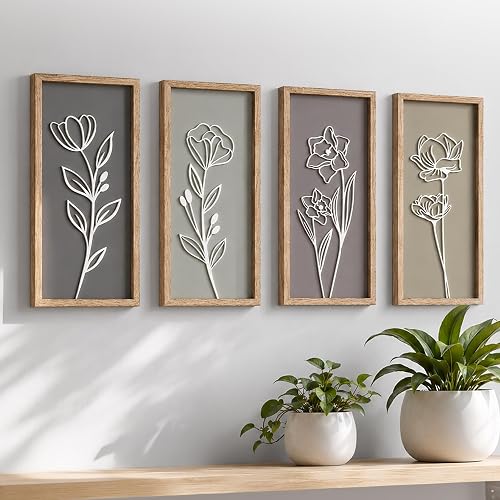
| 3D Wooden Floral Bathroom Wall Decor (Set of 4) | Tide and Tales | Check price on Amazon | 4 | 7" x 16" each | Yes, wood frames | Yes, all hanging hardware |
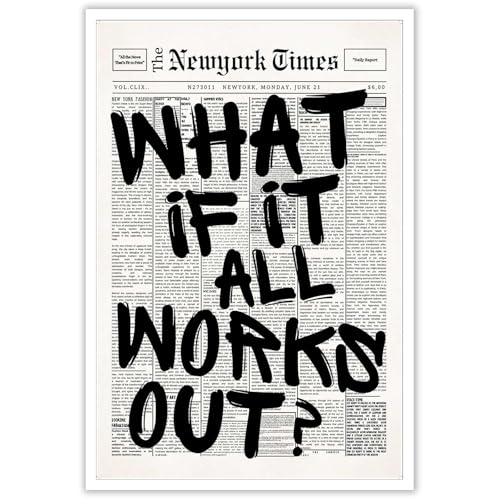
| Retro Black And White Newspaper Poster | Drimiler | Check price on Amazon | 1 | 12x16 in | No — unframed | Not stated |
| Funny Frog Bathroom Wall Art | YYNISPIN | Check price on Amazon | 1 | 12x16 in | Yes, solid wood frame | Not stated (ready to hang) |
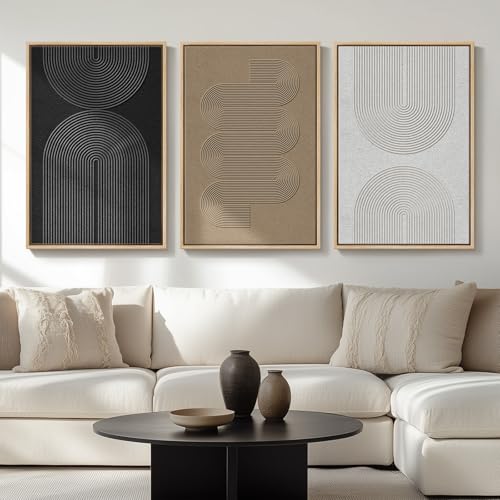
| Large Framed Boho Modern Neutral Abstract Wall Art | Cuspin | Check price on Amazon | 3 | 24x36 in each; 36" H x 72" W total | Yes | Not stated (ready to hang) |
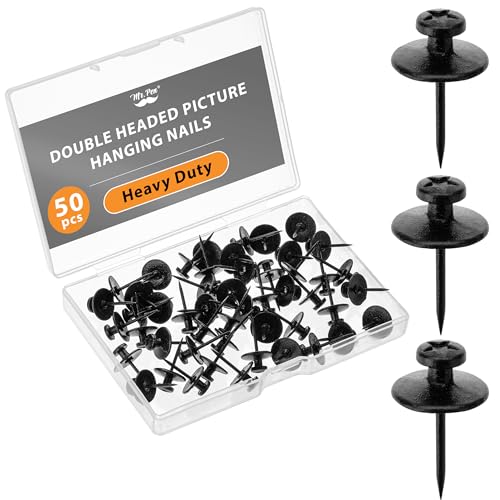
| Mr. Pen- Double Headed Picture Hanging Nails, 50 Pack | Mr. Pen | Check price on Amazon | n/a | approx. 0.8 in length | n/a | 50 nails + storage box |
| MHARTK66 Abstract Mountain Forest Landscapes | MHARTK66 | Check price on Amazon | 3 | 12"x16" each | Yes, natural wood frame | Yes, hooks and accessories |
Quick answer: Hang the center of your artwork at 57–60 inches from the floor — eye level for most people — and drop that to about 48 inches when the piece sits above a sofa or console so it relates to the furniture instead of floating above it. Measure from the hanging hardware, not the top of the frame, and use a hanger rated above the actual weight of the piece. Most of the framed canvas sets below ship ready-to-hang, so the hardware question is usually about the wall, not the art.
The three numbers that matter
Almost every hanging mistake traces back to skipping one of these:
- Center height. Galleries hang art with the center at roughly 57–60 inches. Your eye doesn't care where the top of the frame lands; it cares where the middle of the image sits.
- Gap over furniture. Leave 6–10 inches between the top of a sofa or console and the bottom of the frame. More than that and the art reads as unrelated to the furniture underneath it.
- Hook drop. Hang the piece on your finger by its wire or sawtooth, measure from the taut wire to the top of the frame, and subtract that from your target top-of-frame mark. That difference is why so many pictures end up two inches too high.
The hardware side of the job
For anything light — a small framed print, a clock, a canvas panel — a double-headed picture hanging nail is the least destructive option that still holds. The Mr. Pen- Double Headed Picture Hanging Nails, 50 Pack, Black are zinc alloy, roughly 0.8 inches long, and rated to support up to five pounds each. That five-pound figure is the number to plan around: weigh your piece, and if it's near or over the limit, use two nails or step up to an anchor rated for the load.
The best how to hang wall art guide for your situation depends on how you plan to use it and where.
The double-headed design exists so the nail goes in at an angle and leaves a smaller hole than a screw would — useful if you're renting, or if you expect to rearrange. The flat top means you can tap it in without a heavy swing, which matters when you're working on drywall you'd rather not dent.
What a nail like this won't do: carry a heavy multi-panel set into hollow drywall with confidence. For the 24x36-inch panels in the Cuspin set, you want studs or proper drywall anchors, not nails alone.
Who this guide is for
You're the right reader if you've got blank wall and a piece of art sitting against the baseboard because you weren't sure where it goes. You're also the right reader if you've hung things before and they always end up looking slightly off — that's almost always the height rule, not your taste.
It's especially useful if you're working with sets. Multi-panel arrangements like the MHARTK66 three-panel or the Tide and Tales four-piece are where people freeze, because now there are spacing decisions on top of height decisions. The fix is mechanical: lay the whole arrangement on the floor first, get the spacing you like, measure the total footprint, then transfer that rectangle to the wall with a pencil and a level before a single nail goes in.
Who should skip it
If you're hanging something genuinely heavy — a large mirror, a solid-wood piece, anything over about 25 pounds — the light-duty approach here isn't enough. Find studs, use rated hardware, and consider a French cleat. Nothing in this guide covers that load class.
Skip it too if you're hanging on plaster over lath, brick, or tile. Those substrates need different tools entirely — masonry bits, tile bits, or dedicated plaster hooks. Tapping a picture nail into plaster tends to crack it in a spiderweb you'll be patching for an hour.
And if you're leaning art on a shelf or console rather than hanging it, none of the height math applies. Lean and layer freely.
Honest trade-offs
Ready-to-hang costs more than unframed. The Drimiler poster is $12.58 unframed; a comparable 12x16 framed canvas like the YYNISPIN frog runs $22.99. That gap is roughly the framing. If you already own frames or want a custom mat, unframed is the cheaper path — but budget for the frame and the time.
Sets look better and are harder to hang. A three-panel arrangement fills a wall more convincingly than one piece, but you've now got three chances to be off-level. Single pieces are forgiving.
Small holes vs. real holding power. Picture nails leave less damage, but they cap out. Anchors hold far more and leave a hole you'll need to patch. Pick based on whether the arrangement is permanent.
Wood frames in wet rooms. The Tide and Tales set is described as built to resist bending or warping even in humid bathrooms. That's a manufacturer claim about their construction — worth noting, but if your bathroom has no exhaust fan, treat any wood-framed piece cautiously regardless of the listing copy.
What to check on the listing before you buy
Listings change without notice, so verify these yourself at the moment you're ordering:
- Current price. Every figure above is a snapshot. Check what it actually is today.
- Variant. Several of these have size and panel-count options. The Cuspin listing specifies 24x36 inch panels; the MHARTK66 specifies 12"x16". Confirm the dropdown matches the dimensions you measured for your wall.
- Framed vs. unframed. The Drimiler poster is unframed. Read that field carefully — it's the single most common surprise on wall art orders.
- Hardware included. Tide and Tales and MHARTK66 both state hanging hardware ships in the box. Others don't say. If it isn't stated, assume you're supplying it.
- Warranty and return window. Check the current terms on the listing page.
- Reviews. Go read them yourself, especially recent ones and any with buyer photos — those tell you about print quality and color accuracy in ways product copy can't.
Alternatives worth considering
3D Wooden Floral Bathroom Wall Decor (Set of 4) — consider instead if…
…you want texture rather than another flat print. The 3D Wooden Floral Bathroom Wall Decor (Set of 4) Lightweight, Ready-to-Hang Framed Wall Art For Living Room, Bedroom, or Office - Premium Boho Botanical Farmhouse Decorations - Gift-Boxed uses raised wooden floral cutouts, so the pieces catch light and cast small shadows. Each panel is 7" x 16", which makes a narrow vertical stack or a horizontal row of four — good for awkward wall strips beside a door or over a toilet. It's $35.99, lightweight, and ships gift-boxed with hardware included.
Retro Black And White Newspaper Poster — consider instead if…
…you're testing a layout before committing. At $12.58, the Retro Black And White Newspaper Poster What If It All Works Out Canvas Wall Art Positive Affirming Quote Minimalist Prints Painting For Home Bedroom Dorm Wall Decor 12x16in Unframed is cheap enough to buy two and figure out spacing in the real room. It's unframed canvas at 12x16 inches with a minimalist typography design — so you control the framing entirely, which suits anyone who already owns a stack of standard frames.
Funny Frog Bathroom Wall Art — consider instead if…
…the room should be funny, not tasteful. The Funny Frog Bathroom Wall Art, Cute Japanese Frog in Toilet Wall Decor, Whimsical Green Animal Restroom Poster Canvas Painting Prints Artwork 12x16 inch Framed is a single 12x16 framed canvas printed with fade-resistant inks and mounted on a solid wood frame. At $22.99 it's a low-stakes way to give a guest bathroom a personality, and the small format means one nail and one measurement.

Large Framed Boho Modern Neutral Abstract Wall Art — consider instead if…
…you're filling a genuinely large wall. The Large Framed Boho Modern Neutral Abstract Wall Art for Living Room, 3 Piece Black and White Canvas Prints Paintings Artwork for Walls, Geometric Pictures for Office Bedroom Dining Room Decor, 24x36 In spans 36" H x 72" W across three 24x36 panels — enough to anchor a sofa wall on its own. At $132.99 it's the priciest option here, and the listing is explicit that the artwork is 2D printed rather than 3D textured or hand-painted. Plan for stud-mounted or anchored hardware at this size.
MHARTK66 Abstract Mountain Forest Landscapes — consider instead if…
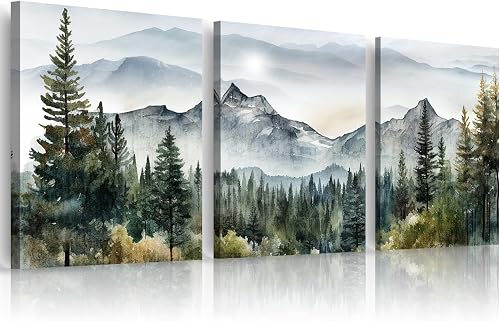
…you want the multi-panel look without the multi-panel budget. The MHARTK66 Wall Art for Living Room Modern Wall Decor for Bedroom Office Decor Abstract Mountain Forest Landscapes Ink Painting 3 Piece Framed Canvas Art Prints Ready to Hang Wall Pictures Home Decor is three 12"x16" panels on natural wood frames for $27.06, with hooks and accessories in the box. Smaller panels are easier to level and lighter on the wall — a reasonable first multi-panel project.
FAQ
How high should art go above a sofa? Aim for 6–10 inches between the top of the sofa back and the bottom of the frame. This usually puts the center of the art nearer 48 inches than 60, which is correct — art over furniture should relate to the furniture, not to a standing viewer.
How do I space panels in a multi-panel set? 2–4 inches between panels reads as one unified piece. Lay the set out on the floor first, adjust until it looks right, then measure the total width and height and mark that rectangle on the wall before hanging anything.
Can I use picture nails for a three-panel set? Depends on weight. The Mr. Pen nails are rated to five pounds each, so light framed canvases like the MHARTK66 12"x16" panels are plausible with one or two nails per panel. Weigh each panel first. For 24x36 panels, use anchors or studs instead.
What if my art doesn't come with hardware? Check the listing field before ordering. Tide and Tales and MHARTK66 both state hardware is included; others don't specify. If it's not stated, buy hanging nails or anchors at the same time so you're not stalled mid-project.
Related guides
- Top 10 Tips for Best home decor and accent furnishings - area rugs, floor lamps, wall art, coffee tables, console tables, end tables, accent tables, blackout curtains
- How Snugaria Researches Products
- Best Options for Best home decor and accent furnishings - area rugs, floor lamps, wall art, coffee tables, console tables, end tables, accent tables, blackout curtains
Key Takeaways
- Choosing the right how to hang wall art guide means matching the key features to your specific needs and budget
- Read real customer reviews and check the return policy before you commit
- Compare value across models — the priciest option is not always the best fit