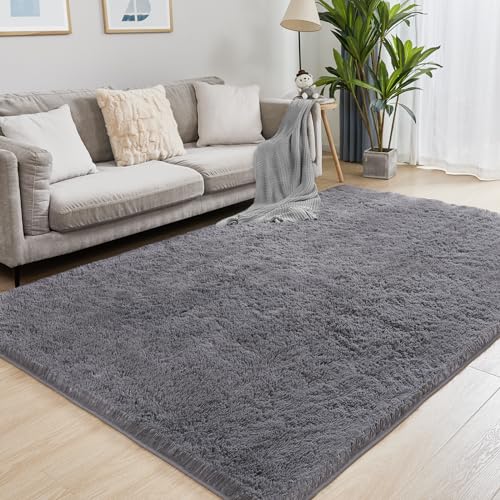
Spec and compatibility table
| Product | Listed size | Pile height | Backing | Cleaning | Price |
|---|---|---|---|---|---|
| Puremy Fluffy Shag Area Rug | 4x6 | Not stated (high-pile) | Non-slip high-density anti-slip dots | Spot clean or hand wash; machine wash possible but not recommended | Check price on Amazon |
| Chicrug Soft Runner Rug | 2x6 | 1.8 in | Memory foam + dotted bottom | Vacuum; hand wash cold, hang dry | Check price on Amazon |
| Ophanie 2x4 Small Rug | 2x4 | Not stated (shaggy) | Non-slip dots over high-density sponge interlayer | Not stated | Check price on Amazon |
| Merelax Modern Soft Fluffy Large Shaggy Rug | 4'x6' | 2 in | Non-slip | Not stated | Check price on Amazon |
| Small Shag Area Rug for Bedroom | 2x3 | 1.7 in (0.3 in memory sponge) | Thousands of non-slip points | Low-power vacuum; hand wash or damp cloth, air dry | Check price on Amazon |
| Washable 2x3 Entryway Area Rug | 2x3 | Low pile | Non-slip backing | Machine wash cold, hang or air dry | Check price on Amazon |
Quick answer: Pick the rug size from your furniture layout, not your room's dimensions. In a living room, the rug should be wide enough that at least the front legs of every seat sit on it; in a bedroom, it should extend 18–24 inches past the sides and foot of the bed. Then leave 8–24 inches of bare floor between the rug edge and the walls so the room reads finished instead of wall-to-wall carpeted.
Most rug-size mistakes are the same mistake: buying the size that was on sale, then arranging furniture around a rug that's a foot too small. Here's how to get it right the first time.
The step-by-step method
1. Measure the room, then ignore that number for a minute. Write down the wall-to-wall dimensions, but treat them as a ceiling, not a target. Gotcha: a 12x14 room almost never wants a 12x14 rug. You're sizing to the furniture group inside the room.
The best how to choose area rug size for your situation depends on how you plan to use it and where.
2. Draw the furniture group. Sketch the seating arrangement or bed placement. Measure the outer edges of that grouping — the outside of the sofa's left arm to the outside of the chair on the right, and from the front of the TV console to the back of the sofa. Gotcha: people measure the sofa and forget the side tables and the chair that got pulled in for Thanksgiving.
3. Pick your leg rule.
- All legs on: the most generous look, needs a rug at least 24 inches larger than the furniture group on every side.
- Front legs on: the workhorse. The rug tucks under the front of every seat, visually tying them together. Most 8x10 and 9x12 buys live here.
- Floating (no legs on): only works under a coffee table in a small room, and only if the rug is at least as wide as the sofa. Gotcha: a floating rug narrower than the sofa looks like a bath mat that wandered in.
5. Check the border of bare floor. Aim for 8–24 inches of exposed floor on all sides in a room-sized layout. Under 8 inches and it reads like failed carpet; over 24 and the rug looks marooned. Gotcha: in a narrow hallway or entry, symmetry matters more than the number — 4 inches per side beats 10 on one side and 0 on the other.
6. Measure your door swing. Before buying anything with real pile, open the door fully and measure the gap between the door bottom and the floor. A 2-inch pile rug under a door with a ¾-inch clearance means a door that no longer opens. Gotcha: interior doors and closet doors both count.
7. Decide runner vs. rectangle for the leftovers. Bedsides, galley kitchens, hallways, and the strip in front of a sofa are runner territory, not small-rectangle territory. A 2x6 or 2x4 in those spots covers the walking path; a 2x3 covers a landing spot.
What goes wrong, and how to fix it
The rug is too small. Symptom: furniture legs all sit on bare floor and the rug looks like an island under the coffee table. Fix: go up a size, or commit fully to the small-rug look by centering it as a deliberate accent — under a chair, at a bedside, in front of a dresser — rather than trying to make it anchor the whole room.
Two rugs fighting each other. Symptom: an open-plan space where the living rug and dining rug nearly touch. Fix: leave a clear gap of bare floor between zones, and make one rug obviously larger so the eye reads a hierarchy.
The rug slides. Symptom: you nudge it back into place every few days, or it wrinkles into a trip hazard. Fix: a rug pad on hard floors, or choose a rug with a genuine non-slip dotted backing. On low-pile floor mats, backing type matters more than weight.
Creases that won't drop. Symptom: fold lines from vacuum-compressed shipping. Fix: unroll and lay flat. Puremy, Chicrug, junhejiamei, and HY HAO YUN LAI all ship compressed and note that pile and creases recover over roughly 2–7 days; the low-pile mat's instructions add that a steam iron on the back speeds up stubborn folds.
Pile height blocks the door. Symptom: the door drags or won't clear. Fix: move the plush rug inward past the door swing and use a low-pile mat at the threshold.
Wrong rug for the traffic. Symptom: a shag rug in an entry, matted and gritty within a month. Fix: shag belongs in bedrooms, nurseries, and under-foot zones; entryways want low pile you can actually wash.
When the fix is a new one
These are accent and small-format sizes — bedsides, entries, layering, dorm floors. None of them will anchor a full living room seating group on their own.
Puremy Fluffy Shag Area Rug, 4x6 Grey Rugs for Bedroom — covers the walking side of a bed
At 4x6 with memory foam under high-pile fibers, this is the size that lands where your feet land — one side of a queen bed, or a study nook. Puremy Fluffy Shag Area Rug, 4x6 Grey Rugs for Bedroom, Soft Plush Area Rugs for Living Room, Non-Slip Indoor Carpet for Nursery, Study Room, Dressing Room, Home Decor lists a non-slip dotted backing rated for tile, wood, and concrete.
Chicrug Soft Runner Rug for Bedroom Living Room Plush Fluffy Rugs 2x6 — the bedside-strip solution
When a rectangle won't fit between the bed and the wall, a 2x6 runner covers the path instead. Chicrug Soft Runner Rug for Bedroom Living Room Plush Fluffy Rugs 2x6 lists a 1.8-inch pile with memory foam and a dotted bottom — worth checking against your door clearance first.
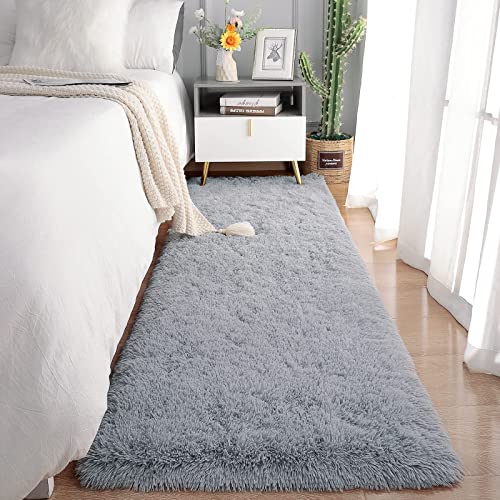
Ophanie 2x4 Small Rug — a layering piece for sparse rooms
Ophanie explicitly positions this one for an overlaid look on top of a larger rug, which is a real fix for rooms with too little furniture to hold a big rug down. Ophanie 2x4 Small Rug Upgrade Non Slip Throw Bedside Area Rugs, Fluffy Soft Grey Mini Bedroom Carpet, Affordable Door Entryway Indoor Inside Front Entrance Dog Mat, Home Decor Aesthetic, Nursery.
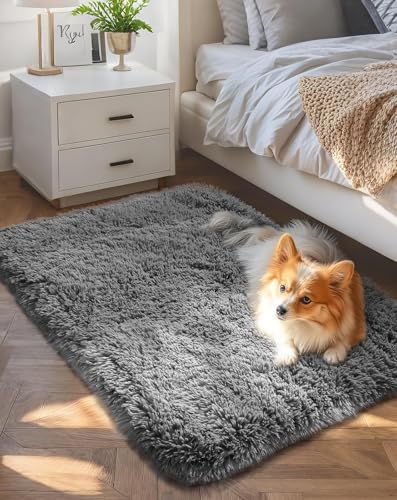
Merelax Modern Soft Fluffy Large Shaggy Rug — the deepest pile of this group
A stated 2-inch pile is the plushest here, and also the one most likely to interfere with a door swing. Merelax Modern Soft Fluffy Large Shaggy Rug for Bedroom Livingroom Dorm Kids Room Indoor Home Decorative, Non-Slip Plush Furry Fur Area Rugs Comfy Nursery Accent Floor Carpet 4'x6' Grey is described for medium-traffic areas.
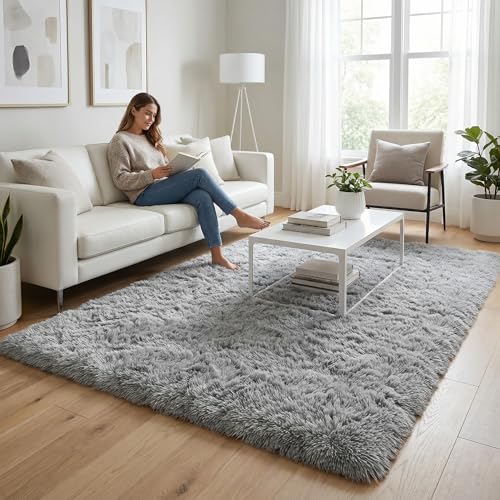
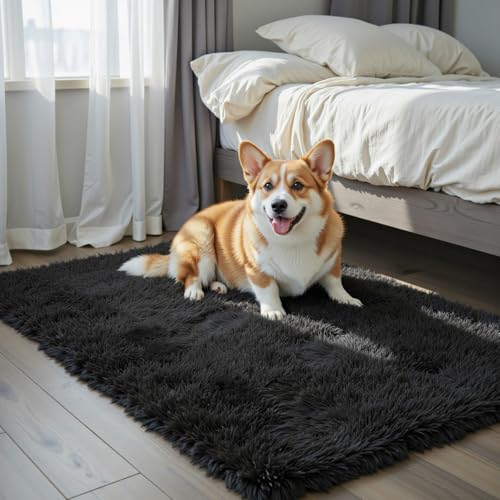
Small Shag Area Rug for Bedroom, 2x3 Black Soft Plush Carpet — a single landing spot
2x3 is the size for one specific place your feet go. Small Shag Area Rug for Bedroom, 2x3 Black Soft Plush Carpet lists a 1.7-inch pile over a 0.3-inch memory sponge, which the listing says also dampens footstep noise.
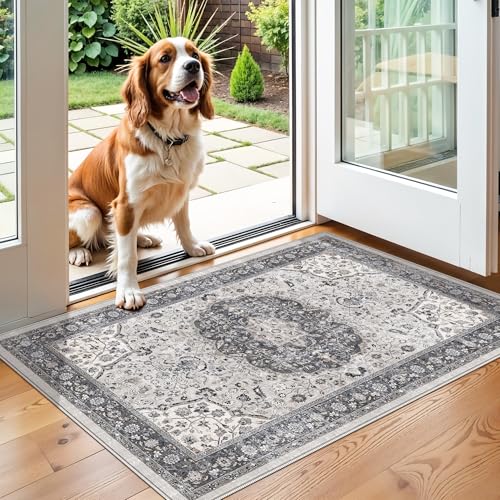
Washable 2x3 Entryway Area Rug — the doorway-safe option
Low pile is what you want at a threshold, and machine-washable is what you want where shoes land. Washable 2x3 Entryway Area Rug: Vintage Soft Thin Door Mat with Non Slip Backing Water Resistant Carpet for Bedroom Low Pile Floor Mat for Kitchen Bathroom Laundry Easy Clean Rug for Family(2x3,Grey) is described as water resistant with a profile that won't obstruct doorways.
FAQ
What are the standard area rug sizes? Common runs are 2x3, 3x5, 4x6, 5x8, 6x9, 8x10, 9x12, and 10x14, plus runners at roughly 2x6, 2x8, and 2x10. Small formats like 2x4 exist too. Listed dimensions are nominal — actual measurements often vary an inch or two.
What size rug goes under a queen bed? An 8x10 placed with the top third under the bed is the standard answer; a 9x12 if you want nightstands on it too. If neither fits, use two runners on the sides.
Is a 5x7 an area rug or a throw rug? "Throw rug" usually means anything small enough to move easily — roughly 2x3 to 3x5. A 5x7 is a small area rug: enough for a coffee table and the front legs of a loveseat, not a full seating group.
Should the rug be wider than the sofa? Yes. At minimum match the sofa's width; ideally extend 6–12 inches past each arm. A rug narrower than the sofa always looks undersized, no matter how nice it is. Check recent buyer reviews and posted photos for the exact size you're considering before ordering.
Related guides
- Best home decor and accent furnishings - area rugs, floor lamps, wall art, coffee tables, console tables, end tables, accent tables, blackout curtains with Self-Employment
- Best home decor and accent furnishings - area rugs, floor lamps, wall art, coffee tables, console tables, end tables, accent tables, blackout curtains for First-Time Buyers
- Best Options for Best home decor and accent furnishings - area rugs, floor lamps, wall art, coffee tables, console tables, end tables, accent tables, blackout curtains
Key Takeaways
- Choosing the right how to choose area rug size means matching the key features to your specific needs and budget
- Read real customer reviews and check the return policy before you commit
- Compare value across models — the priciest option is not always the best fit